
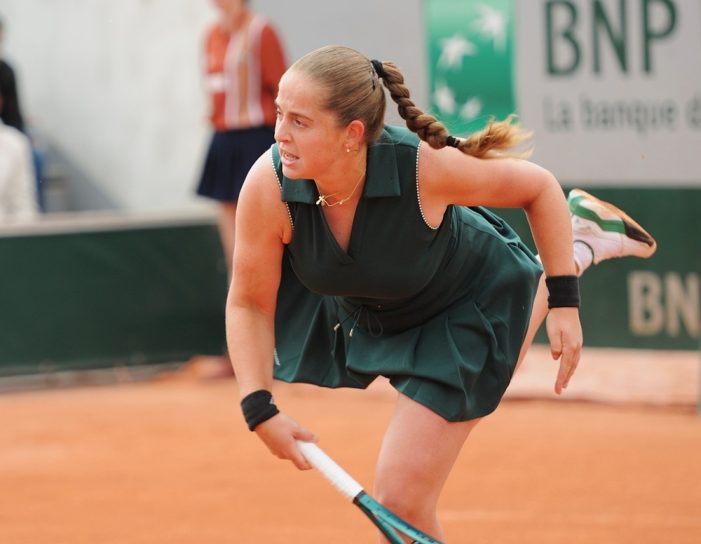
By: Emerald Green | Editorial credit: Peter J. Figura / Shutterstock.com
The fiery post-match confrontation between Jelena Ostapenko and Taylor Townsend at the U.S. Open has sparked debate across the tennis world. Ostapenko’s verbal outburst, where she accused Townsend of having ‘no education’ and ‘no class,’ and her refusal to observe customary etiquette, has raised questions about whether she should be permitted to continue in the tournament, including doubles or mixed doubles draws.
Governing Rules: U.S. Open & Grand Slam Code of Conduct
The Grand Slam Rulebook and the ITF Code of Conduct establish disciplinary measures for player misconduct. Penalties escalate from warnings to point penalties, game penalties, and ultimately default, which can result in disqualification from the tournament. Tournament referees also have discretion to impose fines, revoke prize money, and bar participation in all draws for ‘unsportsmanlike conduct’ or ‘aggravated behavior.’
Case for Banning Ostapenko
- Repeat Offender: Ostapenko has a history of unsportsmanlike behavior, including a $10,000 fine at Wimbledon 2022.
2. Sportsmanship Breach: Insulting an opponent’s intelligence and class, alongside refusal to observe tennis etiquette, violates the spirit of the game.
3. Tournament Reputation: Allowing her to continue without sanction may tarnish the U.S. Open’s image and suggest tolerance for disrespectful or culturally insensitive remarks.
Case Against a Ban
- No Physical Violence: Unlike cases where players physically endangered others, Ostapenko’s misconduct was verbal.
2. No Explicit Racial Slur: Although Townsend perceived undertones, no direct racist language was used, and Ostapenko denied intent.
3. Proportionality: Past precedent (e.g., Serena Williams’ 2009 tirade) suggests fines and code violations are the standard response, rather than disqualification.
Likely Outcome
The most likely outcome is a financial penalty and an official warning. She may also be placed under heightened scrutiny for the remainder of the tournament. While a full ban from singles, doubles, or mixed doubles is legally permissible, it is unlikely unless further misconduct occurs or additional evidence of racial abuse emerges.
Conclusion
Under the Grand Slam Code of Conduct, officials have the authority to suspend Ostapenko from all draws for aggravated behavior. However, based on historical precedent, the more probable sanction will be a fine and a warning rather than a complete ban. This controversy highlights the ongoing challenge of balancing sportsmanship, cultural sensitivity, and proportional discipline within professional tennis.
Click here to listen to podcast.

Should Jelena Ostapenko Be Banned from the U.S. Open? added by NewBlackVoices on
View all posts by NewBlackVoices →